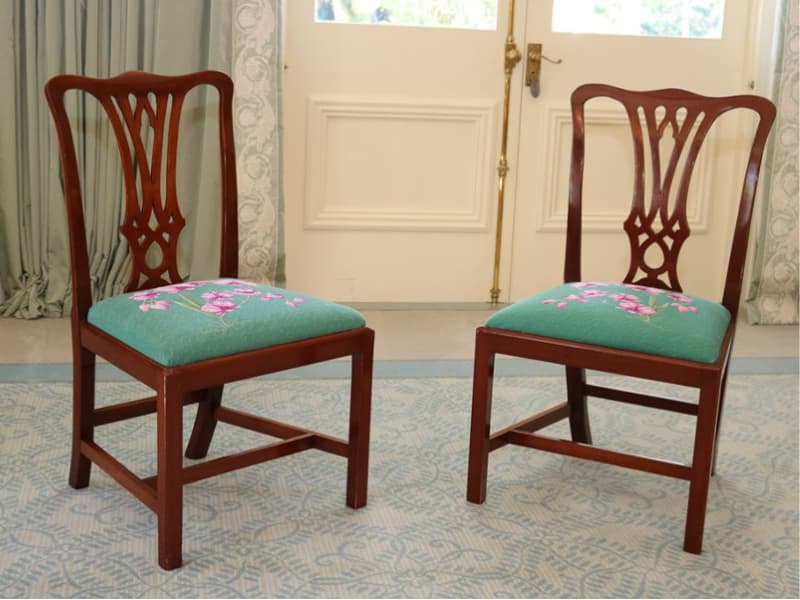
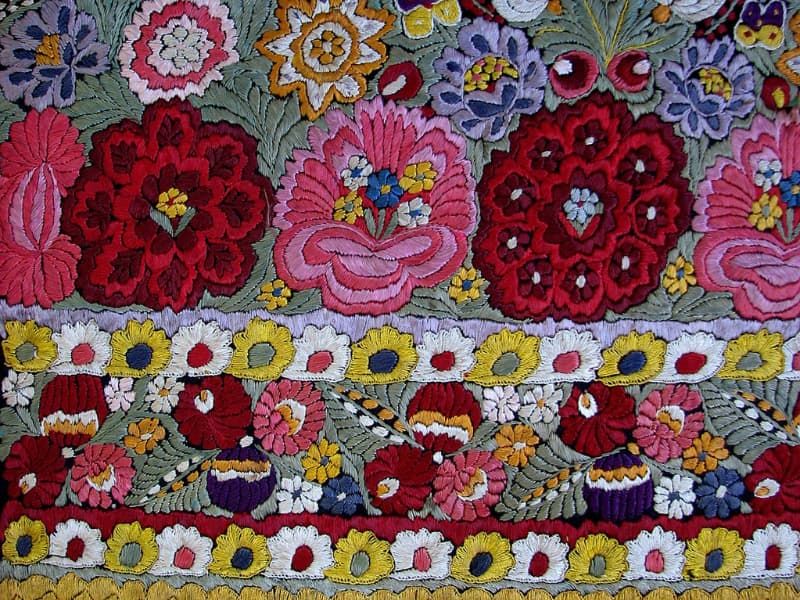
With the passing of Queen Elizabeth II, debate has increased as to whether Australia will remain a Constitutional Monarchy or become a republic. No matter your political beliefs, this time is likely to be judged an historical moment in years to come. One of the many benefits associated with Guild’s Collection is its ability to capture parts of our social history that would otherwise be lost to time. The Guild is aware of how fortunate we are to hold several items related to royalty. These objects do act as a snapshot into what was important in people’s lives at certain points in time.
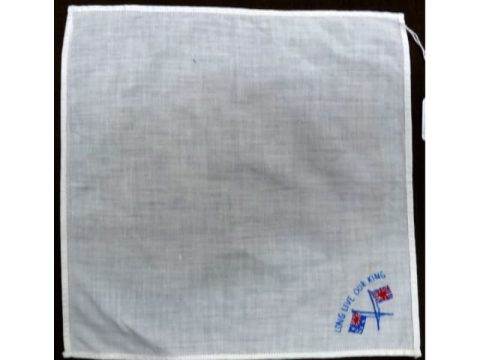 The 15 May 1937 edition of the Australian Women’s Weekly included “thrilling souvenirs” to make in celebration of the Coronation of George VI and the Queen Consort, Elizabeth. Stitchers had the opportunity to decorate cushions, household linens and even handkerchiefs with royal emblems. The picture to the left details a handkerchief that is held within our collection. Whilst the pattern is not from the 15 May 1937 edition of the Australian Women’s Weekly, it nonetheless highlights how important Australia’s links with royalty were.
Filet crochet was also a popular pastime during this period and the two examples below detail the extent of its popularity in recording both the Coronation of George VI (1937) as well as the visit to Australia of his daughter, Queen Elizabeth II in 1954.
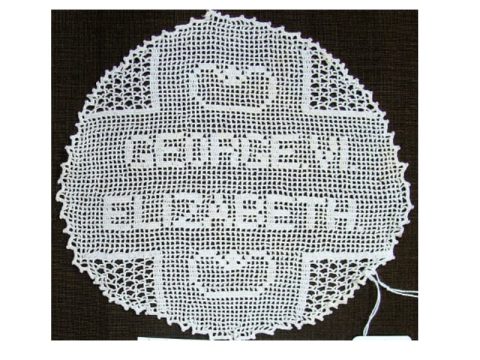
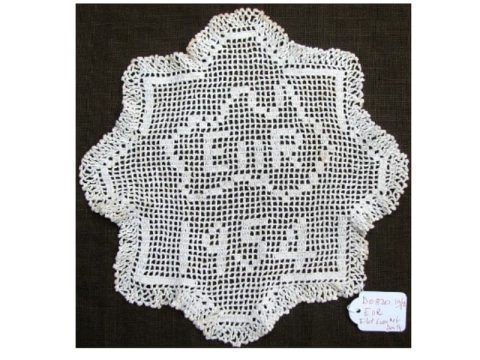
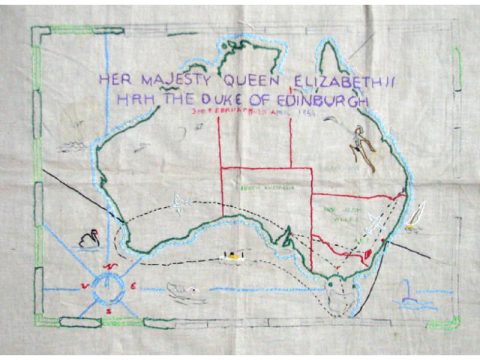
Queen Elizabeth’s (1954) visit to Australia was the first tour ever conducted by a reigning monarch and thus was considered a significant event within Australia. Children were provided with samplers to stitch that recorded the tour’s progress of the Queen and her consort, Prince Philip, Duke of Edinburgh.
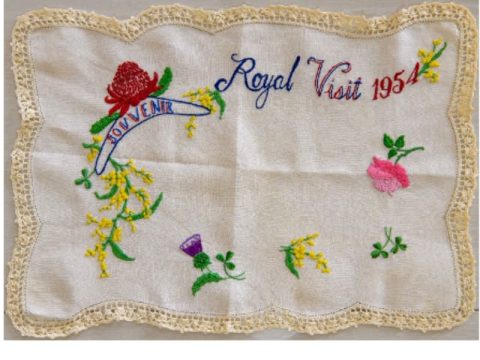
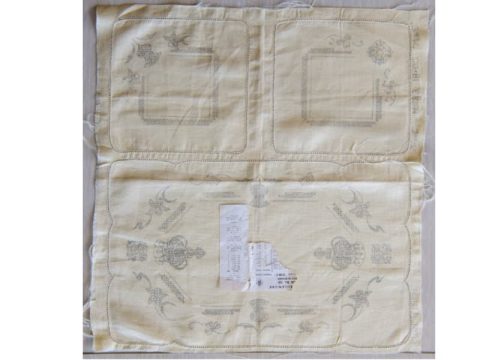
An array of pre-stamped linen items (including doilies, tablecloths and duchess settings) was produced to mark both Queen Elizabeth’s II Coronation and her tour to Australia. It is likely that most Australian households at this time would have had such items for either daily use or “for good.” These are two such items that are held within the Guild’s Collection.
Whilst this article has so far concentrated on items that were for practical and domestic use, our Collection also highlights the importance that royalty held for many. As the object below demonstrates, some stitchers applied great effort and creativity to celebrate their admiration or love of royalty.
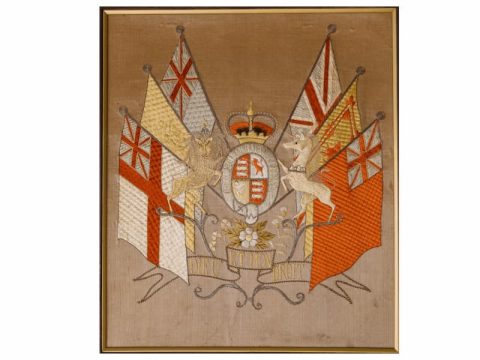
Unfortunately, this object’s provenance has been lost to time. However, the Guild believes that the embroidery is a representation of the Royal Coat of Arms of the United Kingdom as it includes many of the key elements:
· Shield: The shield is divided into four quarters. The quarters represent the symbols of Ireland, England, and Scotland. The upper left and lower right quarters of the shield feature the three guardian lions, which are associated with England. The top right quadrant depicts the lion rampant, which is Scotland’s royal symbol; and the lower left quadrant incorporates the harp which represents Ireland. Wales does not play a role in the Royal Coat of Arms because when the Act of Union was passed (1707 & 1801), Wales was already considered part of the United Kingdom.
· Garter Circlet: Surrounding the shield is the Garter circlet. The Most Noble Order of the Garter is a chivalric order first started by Edward III in 1348. The circlet is inscribed with the order of the motto, Honi soit qui mal y pense, which translates to “shame on he who thinks evil of it”. An additional motto runs along the base – Dieu et mon droit. This motto is associated with English monarchs and translates to “God and my right.”
· Lion and Unicorn: The lion represents England and it stands on the “Dexter” or right-hand side of the shield. The unicorn represents Scotland and stands on the Sinister or left-hand side of the shield. According to legend, a free unicorn is a dangerous beast and that is why within the actual coat of arms, the unicorn is chained. Within the embroidery, this detail has not been included.
· Representation of the “Compartment:” Within the Coat of Arms, the lion and unicorn stand upon a small frame, commonly known as a compartment. It features a thistle, Tudor rose and shamrock, which represent Scotland, England and Ireland. Whilst represented slightly differently, the embroidery incorporates the compartment.
The embroidery also includes a depiction of various flags which are presumed to be associated with the union in some way. Four of the six can be identified:
· Scotland Flag with Lion: Gold flag (middle right),
· Historic British red ensign flag: Red flag (bottom right),
· St George’s Cross: White flag with Red Cross (Bottom left), and
· Union Jack incorporating the Cross of St Patrick: located at top right-hand corner
History is the story of who we are, where we come from, and can potentially reveal where we are headed. The Guild is very fortunate that we can help preserve some of this important history.
Source of Information: Wikipedia